Customer Guide Will Certainly
Exactly How To Keep Peptides After Reconstitution For Maximum Effectiveness
Tom blogs about GLP-1 procedures due to the fact that he could not locate clear responses when he required them. Tom isn't a physician, and the site does not pretend otherwise. Every short article points out the main sources behind its cases, and application advice is cross-referenced against released test data. He covers semaglutide, tirzepatide, retatrutide, and reconstitution. Constantly read the complete citations and speak with a medical professional before beginning anything. In situation I do not see you, great afternoon, excellent night, and excellent night.Reconstituting A Lot Of Vials At The Same Time

The research neighborhood is worthy of much better information than unclear tips to store cold and expect the most effective. Permit one to 2 mins at room temperature level prior to reconstitution to prevent condensation inside the vial. For currently reconstituted peptides, short warming reduces injection pain yet extended heating wastes chilly chain protection. Quick taking care of decreases unneeded temperature exposure. Ice crystal formation throughout cold problems peptide structure.
- This methodical strategy to handling is what SeekPeptides stresses throughout every one of its storage overviews and protocol resources.
- Plainly tag peptide containers and develop that these materials should not be moved or disturbed by others.
- Examine supplier documents for certain service life expectations for each peptide you store.
- Typical frozen storage space offers ample defense for regular research use durations.
Bacteriostatic Mixing Water 10ml
Some methods call for 24-hour maximum at space temperature level. Ideally, you remove the vial from the fridge, withdraw your dosage, and return it within minutes. Treat every minute at room temperature level as degradation time, since that is specifically what it is. Every reconstituted peptide that you prepare to make use of within the following 28 to thirty day should live in a fridge at 2 to 8 degrees Celsius. This temperature level range slows deterioration considerably compared to space temperature level while maintaining the solution in liquid type for simple withdrawal. They remain on racks for months, also years, with minimal degradation.
medicine. Today data from different trials, consisting of those concentrating on tirzepatide weight management results, suggest that the observed side effects are typically convenient. It is very important for individuals considering tirzepatide to review prospective risks and advantages with their healthcare provider. When contrasting tirzepatide to various other agents, such as semaglutide, the tirzepatide weight reduction non-diabetic trial data recommends a premium efficiency. One trial showed that tirzepatide can lead to 6.5% greater weight-loss compared to semaglutide. Another study highlighted that clients receiving a 15 mg dose of tirzepatide experienced nearly twice the weight management of those on semaglutide Pharmalab peptides at a 1 mg dosage. This relative advantage positions tirzepatide as a potentially extra powerful choice for people seeking considerable weight decrease.
Relocating from 25 ° C room temperature level to 4 ° C refrigeration reduces reaction rates by roughly four-fold. This principle, referred to as the Arrhenius connection, describes why cooled peptides last a lot longer than those kept at ambient conditions. Lyophilized peptides can last 1-2 years in the refrigerator or numerous years when iced up, while reconstituted peptides generally remain stable for about one month in refrigeration.Newer substances like SS-31, 5-amino-1MQ, tesofensine, and kisspeptin might have much less reputable storage data compared to heritage compounds. When working with more recent peptides, default to the conservative 21-day service life in remedy at 2-8C unless maker information recommends otherwise. Err on the side of shorter storage rather than longer, and aliquot whenever feasible.
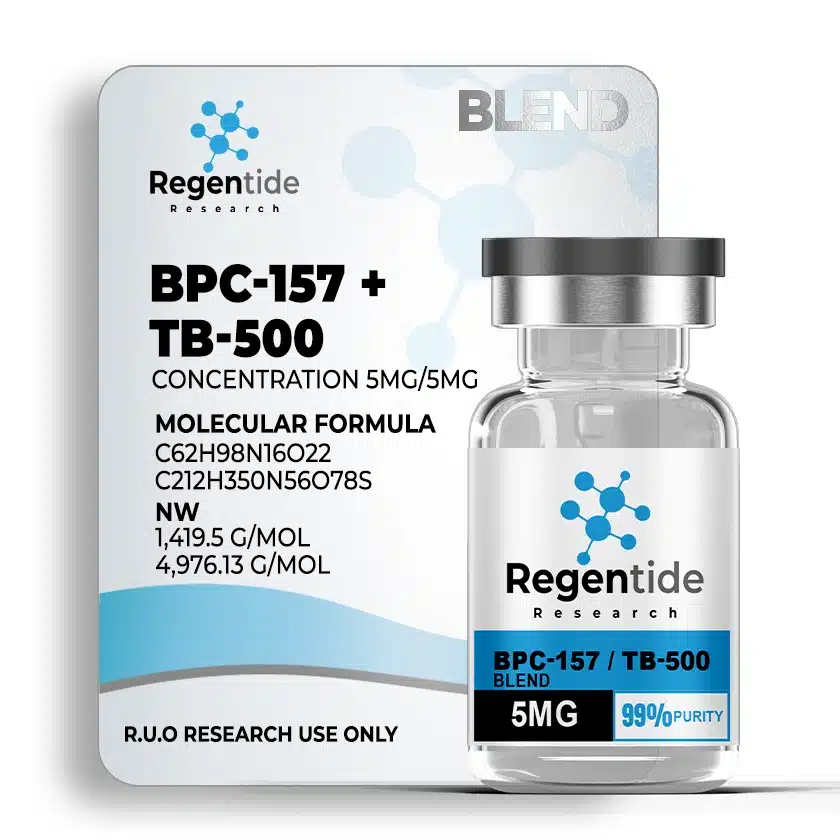
This protects against unintended variation during normal fridge use and makes supply monitoring simpler. A little plastic container with a lid provides organization and added temperature level buffering. Cagrilintide and mix items call for refrigeration meeting both parts' requirements.
Yet most researchers miss it due to the fact that it appears like extra work. Aspartic acid (Asp) residues are particularly susceptible to hydrolysis-related deterioration. Asp can develop a cyclic imide intermediate that either restores the initial amino acid or converts to iso-aspartate, an isomer with various residential or commercial properties. In turn containing Asp-Pro, the cyclic imide formation can in fact cleave the peptide backbone completely, splitting the peptide into two fragments. As opposed to an easy side-chain alteration, cysteine residues can develop disulfide bonds with each various other.